
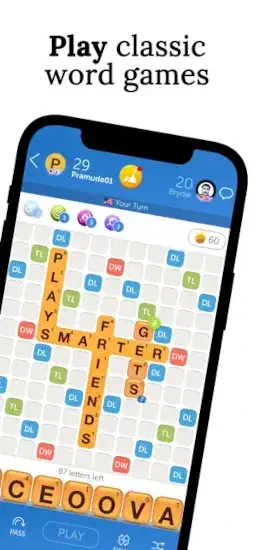
Words With Friends arrived in 2009 and did something no one expected. It made word games social.

Words With Friends is the game that defined mobile word gaming and is still here, still updated, and still connecting players across generations. The question is whether it kept its soul or became buried under ads and extra features.
Words With Friends is a word game hub. Classic matches against friends who have been on your list for years. Solo Challenges against fictional characters with rotating themes. Lightning Rounds for fast competition when you do not want to wait days. Daily puzzles for quick practice. Understanding what is new helps you decide whether to return or stick with the classic mode that already worked.
Words With Friends holds a 4.6 star rating on the App Store based on over 751,000 reviews. Size sits around 300 MB depending on assets downloaded. Age range stretches from teenagers learning new words to grandparents who have played for over a decade. If you prefer a faster, simpler word game, Wordfeud offers asynchronous play.
What Is Words With Friends?
Words With Friends is a free to play multiplayer word game developed by Zynga, Inc. that combines classic Scrabble style tile placement with social features, solo challenges, lightning rounds, and clubs.
Think of Scrabble with a social layer. You place tiles on a board to form words, score points and compete against friends or strangers. But you can also play against AI bots, join real-time team matches and chat with clubmates. It is Scrabble meets social media meets competitive gaming.
Casual word game enthusiasts use it to pass time and challenge friends. Competitive players use it to climb leaderboards and test their vocabulary. Social gamers use it to connect with friends and meet new people. Anyone who enjoys word puzzles with a competitive edge finds something to like.
How Words With Friends Works
Words With Friends offers multiple ways to play. The core structure includes classic turn based play, solo challenges, lightning rounds, clubs and daily word play. Each mode offers a different way to engage with the game.
Classic turn based play is the foundation. Challenge friends or random opponents to Scrabble style tile placement games on a 15×15 board with premium squares. Take turns placing tiles, forming words and scoring points. Games can last days or weeks depending on how often players take their turns. This mode is perfect for players who want to think strategically and play at their own pace.
Solo challenge offers a different pace. Play against AI WordMaster bots in a ladder of increasingly tough matches. Each match is designed to be played quickly in one sitting, with a five move limit to beat the bot. Rewards include in-game currency and collectible badges. This mode is useful for practice and quick sessions.
Lightning rounds provide the most immediate action. Real time synchronous multiplayer mode with 5 vs 5 team play or 1 vs 1 Lightning Duels. Teams race to 750 points in rapid fire wordplay faceoffs. This mode is fast, competitive, and requires quick thinking. You see results in minutes, not days.
Clubs add a social layer. Join or create clubs with up to 30 members. Chat with clubmates, compete in club leaderboards and earn club boosts. Clubs are the social hub of Words With Friends. You can share strategies, celebrate wins and compete together.
Daily word play rewards consistency. Solve daily puzzles to earn trophies and coins. This mode rewards consistent daily engagement. Daily puzzles are quick and satisfying, perfect for short sessions.
Connected information carries across all modes. Your progress, coins, power-ups, and club memberships carry across all modes. Winning in one mode earns rewards that help in another.
Words With Friends Key Features
Classic Turn Based Play
Challenge friends or random opponents to Scrabble style tile placement games on a 15×15 board with premium squares. Double and triple letter and word scores create strategic depth. Games are turn based, so you can play at your own pace.
This is the core experience. Players who master tile placement, power-ups and board strategy can consistently outscore opponents. The turn based format means you can play a game over days or weeks, making it perfect for busy schedules.
Solo Challenge
Play against AI WordMaster bots in a ladder of increasingly tough matches. Each match is designed to be played quickly in one sitting, with a five move limit to beat the bot. Rewards include in-game currency and collectible badges.
Solo Challenge is useful for practice. You can develop strategic skills without risking coins or rank. Earn badges and currency for wins. This mode is also ad-free, which many players appreciate.
Lightning Rounds
Real time synchronous multiplayer mode with 5 vs 5 team play or 1 vs 1 Lightning Duels. Teams race to 750 points in rapid fire wordplay faceoffs. This mode is fast, competitive and requires quick thinking.
Lightning Rounds offer the most immediate gratification. You see results in minutes, not days. The team element adds camaraderie and a sense of shared achievement. It is the closest Words With Friends gets to real time competition.
Clubs
Join or create clubs with up to 30 members. Chat with clubmates, compete in club leaderboards and earn club boosts. Clubs add a social layer and a sense of community.
Clubs are the social hub of Words With Friends. You can share strategies, celebrate wins and compete together. Club boosts give gameplay advantages that help in other modes.
Daily Word Play
Solve daily puzzles to earn trophies and coins. This mode rewards consistent daily engagement. Daily puzzles are quick and satisfying, perfect for short sessions. Completing daily puzzles builds a habit and keeps you engaged with the game.
Quick Play
Instant matchmaking for turn based games with random opponents. Quick Play is the fastest way to find a game. No waiting for friends to accept invites. This mode is perfect for players who want to jump into a game immediately.
Power-Ups and Boosts
Use in-game power-ups like Word Radar, Bonus Tiles, and Score Boost to gain advantages. Word Radar shows possible words. Bonus Tiles add high value tiles. Score Boost multiplies your score.
Power-ups are strategic tools. Use them wisely for high scoring opportunities. Save them for critical moments. They can turn a losing game into a winning one.
In-Game Currency (Coins)
Earn or purchase coins to enter special games, buy power-ups and unlock rewards. Coins can be earned via match wins, daily puzzles, solo challenges and lightning rounds, or purchased directly via in-app purchases.
Coins are the game’s economy. Managing your coins well allows you to play more games and access premium features without spending real money.
Season Pass
Monthly subscription ($9.99–$12.99) for exclusive rewards, ad-free play and bonus coins. Season Pass is for dedicated players who want premium benefits. It removes ads and provides exclusive content.
Ad-Free Bundle
One-time purchase ($9.99) to remove third party ads between moves. Some users report still being hounded by ads even after purchasing, so verify before buying. The Ad-Free Bundle is a one-time purchase that removes ads permanently.
Cross Platform Play
Play with friends across iOS, Android and web platforms. Cross platform support means you are not limited to players on the same device. You can challenge friends regardless of what phone they use.
Facebook Integration
Link Facebook to find friends, send/receive game invites, and backup progress. This makes it easier to challenge friends and track games. Facebook integration also helps recover accounts if you switch devices.
Multiple Languages
Support for English, French, German, Italian, Portuguese, and Spanish. Localization makes the game accessible to a global audience. Players from different countries can compete against each other.
Words With Friends Design and User Experience
Words With Friends uses a clean, colorful interface with customizable board themes, tile designs and avatars. The design prioritizes social interaction and visual appeal.
Design Strengths
Colorful, modern board themes and tile designs keep the game visually fresh. Customizable avatars, frames, and emotes let players express themselves. Clean, uncluttered interface for turn based play keeps focus on the board. Smooth animations for tile placement and scoring make gameplay feel responsive. Consistent performance on most devices ensures reliable play. Clear guidelines for legal words and premium squares help new players learn. Solo Challenge and Lightning Round visual polish adds excitement.
Board customization is a major visual draw. Players can choose from classic wood boards, modern themes and seasonal designs, plus dozens of tile sets and avatar frames. The game looks different for every player.
Design Weaknesses
Ads after every turn in turn based games (except solo challenges) frustrate many players. Quick Play lag, with opponents scoring 50 points before players can look at their letters, makes the mode feel unfair. Turn notification bugs, requiring players to log out and back in to find their games, cause lost games. Time limit frustrations (10–12 days per turn, or lose the game) penalize casual players.
What Users Say About Words With Friends Game
What Users Appreciate
Users value classic Scrabble style tile placement with premium squares. Solo Challenge against AI WordMasters with increasing difficulty offers ad-free practice. Lightning Rounds for real time 5 vs 5 team play or 1 vs 1 duels provide fast competition. Clubs for social interaction, leaderboards, and club boosts create community. Daily Word Play puzzles for trophies and coins reward consistency. Quick Play for instant matchmaking with random opponents offers immediate games. Power-ups and boosts add strategic depth. Cross platform play with friends across iOS, Android, and web removes device barriers.
Facebook integration helps find friends and send invites. Multiple languages make the game accessible globally. Customizable board themes, tile designs and avatars personalize the experience. Season Pass for exclusive rewards, ad-free play, and bonus coins rewards dedicated players.
What Users Complain About
Ads after every single turn in turn based games (except solo challenges) are the most common complaint. Quick Play lag, with opponents scoring 50 points before players can look at their letters, makes the mode feel rigged. Turn notification bugs, requiring players to log out and back in to find their games, cause lost games and frustration. Time limit frustrations (10–12 days per turn, or lose the game) penalize players with busy lives.
Words With Friends remains a strong word game with excellent social features, but the ad experience, bugs and monetization frustrate many users. Prospective players should test the free version before committing to purchases or subscriptions.
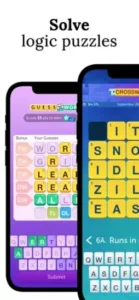
Words With Friends Tips To Improve Your Game
Words With Friends looks simple. Place tiles, form words, score points. But the difference between winning and losing often comes down to small decisions. Here is what experienced players do differently.
Start with short words. Begin with 2-3 letter words to score quick points and clear your rack. Short words like “qi,” “za,” and “jo” score well and use high value tiles efficiently. Use premium squares strategically to maximize every placement. A short word on a triple word score can outscore a long word placed poorly.
Use power-ups wisely. Word Radar shows possible words when you are stuck. Bonus Tiles add high value tiles to your rack. Score Boost multiplies your score for one turn. Save these for high scoring opportunities rather than using them randomly. A well timed Score Boost on a bingo (using all seven tiles) can win a game instantly.
Complete daily puzzles. Daily Word Play puzzles reward trophies and coins. Aim to complete them daily for consistent rewards. This builds a habit and keeps your coin balance healthy. Missing a day means missing free coins and progress toward rewards.
Play Solo Challenge for practice. Solo Challenge matches against AI WordMasters help you develop strategic skills without risking coins or rank. Earn badges and currency for wins. This mode is also ad-free, making it a refreshing break from the ad-heavy turn based games.
Join Lightning Rounds for fast action. Lightning Rounds offer real time 5 vs 5 team play or 1 vs 1 duels for quick, competitive games. Teams race to 750 points in rapid fire wordplay. This is the most exciting mode and offers the most immediate gratification. You see results in minutes, not days.
Join or create a club. Clubs offer social interaction, leaderboards and club boosts. Chat with clubmates, compete in club challenges and earn rewards together. Clubs make the game more social and rewarding. A good club provides tips, encouragement and a sense of community.
Manage your coins. Coins are used to enter special games, buy power-ups and unlock rewards. Avoid spending coins recklessly; save them for high stakes games or power-ups. Coins earned from daily puzzles and solo challenges add up over time if you do not waste them.
Block premium squares. Place tiles to block opponents from accessing double/triple word scores. This limits their scoring potential. Defense is as important as offense. If you see an opponent setting up for a big play, block their path.
Save high-value tiles. Hold onto high value tiles (Q, Z, X, J) for opportunities to score big on premium squares. Patience pays off with these tiles. Playing a “Q” without a “U” is risky; wait for a “U” to appear before using it.
Use Facebook integration. Link Facebook to find friends, send/receive game invites and backup progress. This makes it easier to challenge friends and track games. Facebook integration also helps recover accounts if you switch devices.
Consider Season Pass or Ad-Free Bundle. If ads after every turn are frustrating, the Season Pass ($9.99-$12.99/month) or Ad-Free Bundle ($9.99 one-time) can improve your experience. However, some users report still being hounded by ads even after purchasing, so read recent reviews before buying. The Season Pass also offers exclusive rewards that can accelerate your progress.
Words With Friends Similar Games
Words With Friends is popular, but it is not the only word game on the market. Here is how it compares to other options.
| Game | Best For | Main Difference from Words With Friends |
|---|---|---|
| Scrabble GO | Official Scrabble with modern twists | Officially licensed Scrabble, more game modes, colorful visuals |
| Wordfeud | Minimalist Scrabble alternative | Cleaner interface, turn based, closest WWF feel with fewer ads |
| Word Chums | Solo bots and word strength hints | Nearly identical to WWF, 2-4 players, solo Chumbots |
| Boggle With Friends | Real time word search | Zynga made, real time word search instead of tile placement |
| Wordscapes | Crossword and word search hybrid | Relaxing puzzles, scenic backgrounds, no multiplayer |
| Word Connect | Word search and anagram puzzles | Solo puzzles, no multiplayer, relaxing gameplay |
| Classic Words Solo | Solo Scrabble style play | Single player only, no ads, no multiplayer |
| Ruzzle | Fast-paced word search | 2-minute rounds, multiplayer matchmaking, leaderboards |
| WordPlay.com | Browser based word games | Various word games, including Scrabble and anagrams |
| Text Twist | Anagram and word scramble | Solo anagram puzzles, no multiplayer |
Which one wins? It depends on your preferences. Words With Friends wins on social features and variety. Scrabble GO wins on official licensing and modern twists. Wordfeud wins on minimalist design with fewer ads. If you prefer solo puzzles without social interaction, Wordscapes or Word Connect offer relaxing alternatives. If you want the classic Scrabble experience without the social layer, Classic Words Solo is a solid choice. If you prefer browser-based play, WordPlay.com offers multiple word games in one place.
Words With Friends Game Pricing
Words With Friends is free to download on iOS, Android and web. The free version includes all core gameplay modes, making it accessible for anyone with a smartphone or browser.
In-app purchases range from $0.99 for a Pack of Coins to $49.99 for a Bag of Coins. Power-ups, boosts and other items are also available for purchase. These purchases are optional; you can play without spending money.
Season Pass is a monthly subscription ($9.99-$12.99) for exclusive rewards, ad-free play and bonus coins. This is for dedicated players who want premium benefits.
Ad-Free Bundle is a one-time purchase ($9.99) to remove third party ads between moves. This is a popular option for players frustrated by the ad experience.
Important: Prices vary by region, plan, promotion and App Store updates. Always check the current price before subscribing or purchasing. The free version is generous enough for most casual players.
System requirements: iOS app requires iOS 13.0 or later. Also compatible with iPad and Mac.
Conclusion
Words With Friends is an outstanding word game that successfully combines classic Scrabble style tile placement with social features, solo challenges and lightning rounds. Its core strength is the combination of turn based play with friends, AI WordMaster solo challenges, real time lightning rounds and club social features. For players who enjoy word games with social interaction, it is one of the best options available.
Its greatest strength is the variety of ways to play. Its greatest weakness is the intrusive ads, bugs and monetization that frustrate many users.
Words With Friends fits casual word game enthusiasts, competitive players, social gamers, and anyone who enjoys word puzzles with a competitive edge. It does not fit players who hate ads, players who want a completely ad-free experience without paying or players who prefer solo puzzles without social interaction.
Frequently Asked Questions About Words With Friends
Is Words With Friends free to play?
Yes. Words With Friends is free to download and play. The free version includes Classic Multiplayer, Solo Challenge, Lightning Rounds, and Daily Word Play. Ads appear between games or after moves. You can remove ads through a subscription or one-time purchase. The core gameplay is fully accessible without spending. You can start your Words With Friends download from the App Store.
What is the difference between Classic Multiplayer, Solo Challenge, and Lightning Rounds?
Classic Multiplayer is the original asynchronous mode. You take turns with friends or random opponents over hours or days. Solo Challenge is single player against AI characters with rotating themes and storylines. Good for practicing without pressure. Lightning Rounds are real time multiplayer matches with multiple players competing in games that finish in minutes. Lightning Duels are head to head real time games with short time limits.
How does scoring work in Words With Friends?
Score points by placing letters on premium squares. Double letter and triple letter squares multiply the letter value. Double word and triple word squares multiply the total word value. The board layout is different from Scrabble. The game ends when a player uses all tiles with no draws left, or after three scoreless moves in a row. Remaining rack tiles are subtracted from the opponent’s score at the end.
What are the best strategies for winning more games?
Aim for premium squares early, especially double word and triple word tiles. Keep flexible letter combos with vowels and common consonants. Learn common two-letter words like “aa,” “za,” and “qi” to build off tight boards. Use power-ups like Word Radar, Swap+, and Word Clue strategically rather than wasting them on easy turns. In Lightning Rounds, prioritize short, high value words over long setups. Play defensively by blocking your opponent’s access to premium squares.
Where can I find official information and get support if I have issues?
The official Zynga website has information about the game, updates, and events. The Words With Friends Wiki catalogs word lists, strategies, and game mechanics. For account recovery, purchase issues, or technical problems, contact Zynga support through the website. Official website: https://www.zynga.com/games/words-with-friends/